PolyRanger
Статистика- Последний пост
- 14 авг.
- Последнее чтение
- 07:15
- Постов за неделю
- 2
- Всего постов
- 21
- Тип
- открытый
- Язык
- английский
- Категория
- Криптовалюты (по похожим)
- В каталоге с
- 13 авг.
- 1/24сутки в ленте
- 1 480
- 1/48двое суток
- 1 696
- 1/72трое суток
- 1 829
Оценка по просмотрам недавних постов: пост набирает почти всё за первые сутки.
Посты
Every narrative starts the same way. Quiet, then suddenly everywhere. Volume follows it in. New markets open, liquidity shows up, everyone's trading the same story at once. Then the narrative matures. The outcome becomes obvious, or people just move on. Volume drains out just as fast as it came in. A market tied to a fading narrative isn't less real. It's just less interesting to trade. Knowing where a story sits in that cycle beats knowing the story itself.
Every narrative starts the same way. Quiet, then suddenly everywhere. Volume follows it in. New markets open, liquidity shows up, everyone's trading the same story at once. Then the narrative matures. The outcome becomes obvious, or people just move on. Volume drains out just as fast as it came in. A market tied to a fading narrative isn't less real. It's just less interesting to trade. Knowing where a story sits in that cycle beats knowing the story itself.
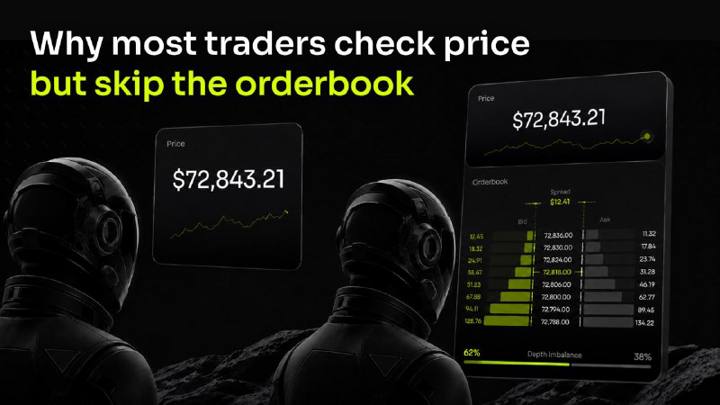
Price tells you where the market landed. The orderbook tells you how it got there, and how easily it can move again. A price can look stable while the orderbook underneath is razor thin, one order away from a big swing. Or it can look shaky while the depth behind it is actually solid. Most people glance at the number and move on. The number on top is rarely the part worth reading.
Not every big bet moves the market. Not every market move comes from a big bet. A whale can drop a large position into a deep, liquid market and barely shift the price. Meanwhile, a handful of smaller trades hitting a thin market can swing probability hard. Size alone doesn't tell you much. What matters is size relative to depth. Watch the reaction, not the trade size. That's where the real story is. Track it across markets on PolyRanger
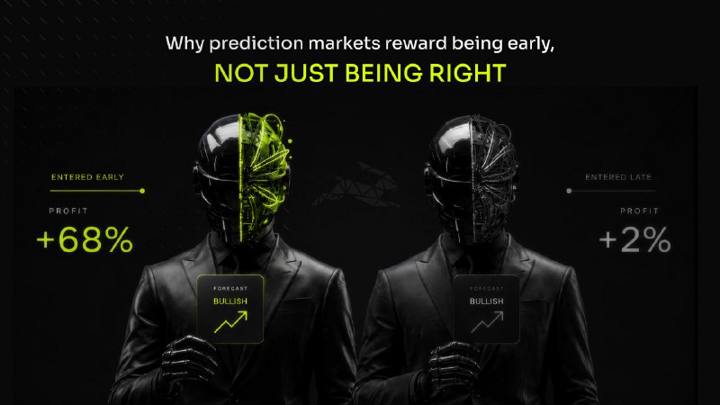
Being right feels good. Being early is what actually pays. Two traders call the same outcome correctly. One gets in while the price is still cheap. The other waits for confirmation, and by then the market has already caught up. Same forecast. Completely different return. Conviction without timing is just an opinion sitting on the sidelines. The edge was never in knowing the outcome. It's in knowing it before the price does.
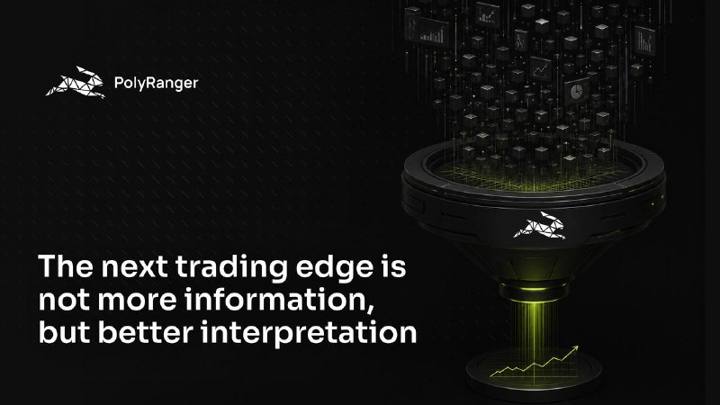
More data used to be the answer. Now it's the problem. Every trader already sees the same headlines, the same charts, the same feeds. Access isn't the edge anymore. Reading it faster and clearer is. Two traders can look at the exact same signal. One sees noise. The other sees a setup. That gap is where the real edge lives now. PolyRanger turns scattered signals into something you can actually read.
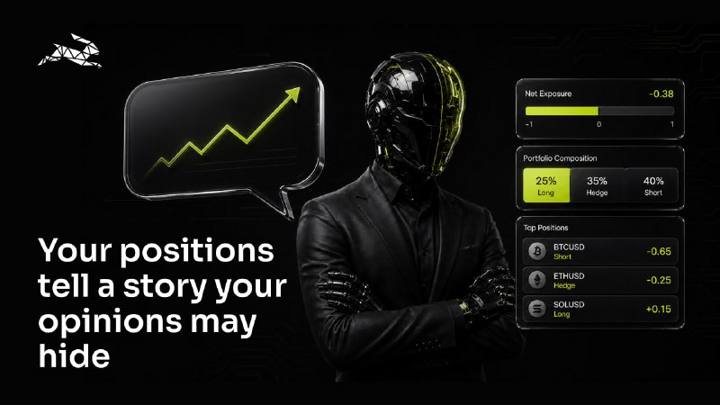
Ask a trader what they think, and you'll get a confident answer. Look at their positions, and you often see something else. Smaller size than the conviction suggests. Hedges quietly placed elsewhere. An exit already lined up. Opinions are cheap. Positions cost something. That's why positions tell the truth more often than words do. PolyRanger shows what's actually being traded, not just what's being said.
You spot an event worth trading. Then the real work starts. Check the platform. Compare the price elsewhere. Check liquidity. Switch tabs again. By the time you're ready to act, the setup already shifted. That gap between finding an opportunity and trading it is where most of the edge disappears. PolyRanger closes that gap. Discovery, comparison, and execution, all in one place.
Traders make markets move. Creators make markets exist in the first place. Someone has to spot the event. Frame the question. Give people a reason to care before a single trade happens. Without that, there's nothing to trade. Traders bring liquidity and price discovery. Creators bring the raw material - the events, the framing, the audience. PolyRanger is built for both sides of that equation.
The market with the most noise is not always the one with the best edge. Attention can attract volume, but it can also hide weak pricing, crowded positioning, and limited upside. Sometimes the better opportunity sits in a quieter market - where the signal is clearer, the structure is stronger, and the price has not fully adjusted yet. In prediction markets, the edge is not in following the loudest narrative. It is in finding the market that is priced best.
Prediction markets are not becoming simpler. They are becoming more distributed. More venues. More signals. More price differences. More paths to the same event. PolyRanger is building the map for that market layer - so traders can navigate opportunity, not search for it.
A forecast says what you think will happen. A tradable opinion asks whether the current probability is worth taking. That difference defines the trade. In prediction markets, conviction alone means little without price, liquidity, spread, downside, and cross-market context. A strong view can still be a weak position if the market has already priced it in. PolyRanger turns opinions into structured decisions by showing the market behind the forecast.
Confidence is not a trading signal. It is only an input. Most bad entries do not come from having a weak view. They come from acting on that view before checking the market around it: price, liquidity, spread, depth, timing, and how the same outcome is moving across venues. In prediction markets, the question is not only “Do I believe this?” It is: “Is this position still worth taking at this price, with this liquidity, in this market structure?” PolyRanger gives traders the context behind the Buy button.
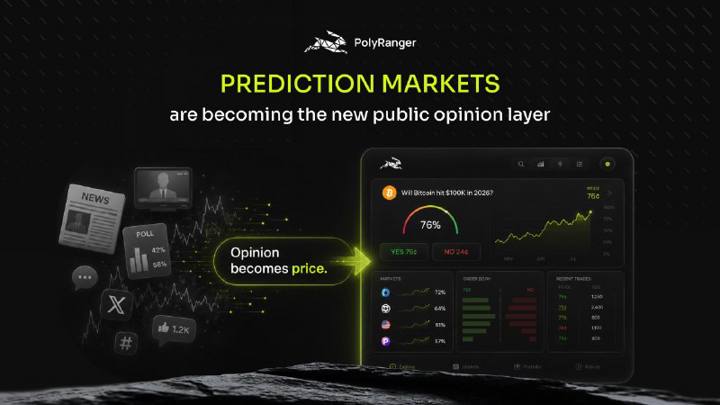
Public opinion used to be read through polls, media cycles, and social feeds. Prediction markets add a stronger signal: capital-weighted expectations. When participants trade an outcome, they are not just expressing a view. They are pricing probability under changing information, liquidity, and risk. That makes prediction markets a real-time layer for measuring what the crowd believes, where conviction is forming, and how expectations move before consensus is visible. PolyRanger.com helps read that layer across markets.
Prediction markets are becoming fragmented: one event, multiple venues, different prices, liquidity, spreads, and execution quality. PolyRanger sits above that fragmentation. It brings markets into one interface where users can search opportunities, compare probabilities, read liquidity, track exposure, and execute with a fuller view of the market. The edge is not in opening another tab. It is in accessing the whole layer. Search. Compare. Execute. polyranger.com
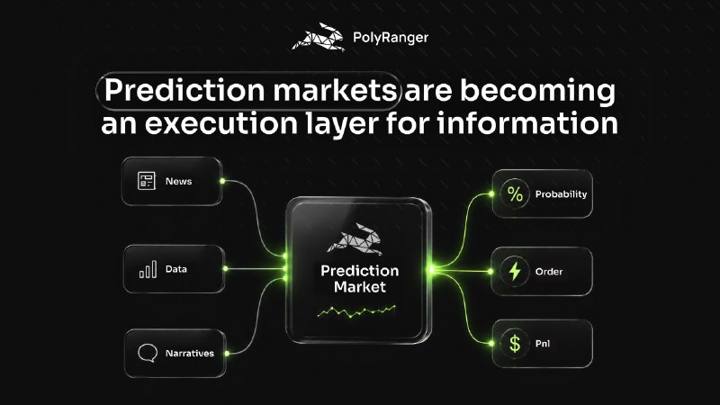
Information is no longer just consumed. It is executed. A headline, a data release, a product launch, or a shift in sentiment now moves directly into probability, pricing, and positioning. In prediction markets, information does not sit in a feed - it becomes an order, a repriced outcome, a change in liquidity, and eventually PnL. That is why prediction markets matter more than ever. They turn narratives into tradable structure and transform attention into market action. PolyRanger is built for that layer: helping users track how signals are priced across venues and act before the market fully converges. Turn signals into execution with polyranger.com
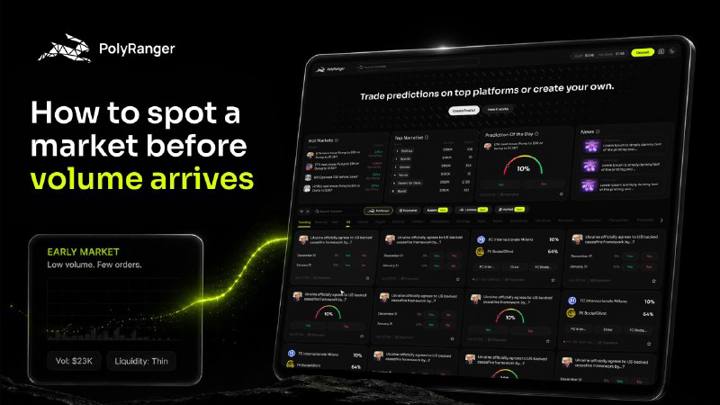
How to spot a market before volume arrives. Volume is confirmation, not the first signal. Before it expands, attention accelerates, probabilities begin to reprice, liquidity appears, and spreads or depth shift across venues. The edge lies in seeing these changes together while the market still looks quiet. PolyRanger consolidates cross-market signals into one view, helping you identify where activity is forming before the crowd arrives. Find the signal before the volume with polyranger.com
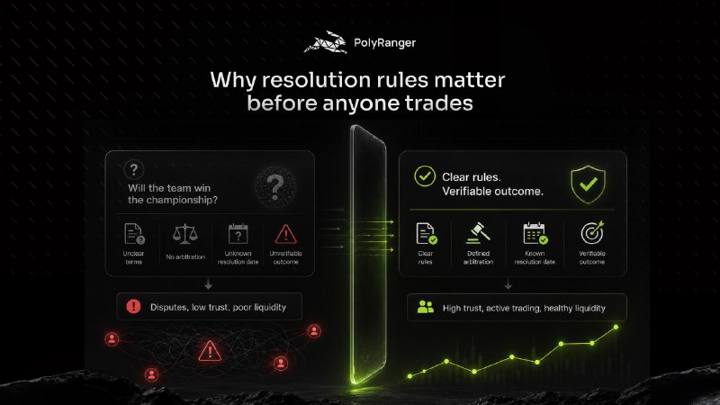
A prediction market is only as strong as its resolution logic. If the outcome cannot be verified clearly, traders are not pricing an event - they are pricing ambiguity. That uncertainty damages the market before it even starts: confidence falls, liquidity stays thin, and disputes become part of the trade. Clear rules do the opposite. They define what counts as the outcome, how it will be verified, and why participants can trust the market structure from the first position. In prediction markets, resolution is not a detail at the end. It is part of the product from the start. Build markets that can be trusted with polyranger.com
Attention can bring users to a market, but it does not create liquidity on its own. A market only becomes tradable when participants have a reason to enter early, provide depth, and help price discovery start. That is why incentives matter. They turn passive interest into active participation, tighten the market, and create the conditions for real trading instead of an empty listing. On polyranger.com, creators can bootstrap this process with incentive mechanics like Outcome Rewards and Mint Share, helping new markets attract liquidity from the start. Attention starts the market. Incentives make it work.
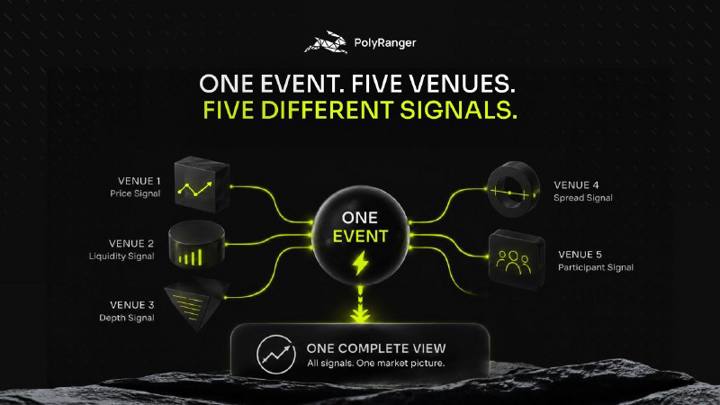
The same event rarely produces the same market picture everywhere. One venue may show a higher probability, another deeper liquidity, a third tighter spreads, while others reflect weaker conviction or slower participant reaction. That is why a single venue never tells the full story. Price is only one signal. Depth, liquidity, spread, and market behavior determine whether that price is strong, fragile, or temporarily misaligned. PolyRanger brings these signals into one consolidated view, so you can compare how the same event is being priced across venues and trade with a fuller market perspective. See the full signal, not just one venue with polyranger.com